

Three thousand years ago, the seed oil of one particular tree was so prized that it was pressed into service perfuming the skin of Egyptian royalty and sealing the scent of the ancient world’s finest fragrances. It didn’t go rancid. It didn’t turn. It kept its silk-soft feel through desert heat and time itself. The Egyptians called it ben oil. We call the tree moringa.
Today, that same oil is quietly becoming one of the most interesting ingredients in facial skincare for mature skin — and if you’re searching for moringa oil for skin after 50, you’ve found a botanical with a genuinely unusual scientific story. This is the most complete, honest guide to moringa oil you’ll find: the real cosmetic science, what it can and can’t do for aging skin, and exactly how to choose and use it.
Pura Vida Moringa Oil for Face, Hair & Nails
Cold-pressed, unrefined, single-origin moringa oil made for skincare — USDA organic and third-party tested. The purest form of the oil the science actually studied, from a brand built on traceable sourcing. Perfect as your final nourishing step.
📋 What’s in This Guide
What Moringa Oil Actually Is
Moringa oil — properly called moringa seed oil or ben oil — is pressed from the seeds of the Moringa oleifera tree. This is an important distinction we’ll return to: this is the oil from the seeds, used topically on skin and hair. It is completely different from moringa leaf powder, the green supplement you swallow (which we cover in our best moringa supplements guide).
The oil earned its ancient name — ben oil — from one of its defining traits: extraordinary oxidative stability. Where most plant oils turn rancid within months, moringa oil resists spoiling for a remarkably long time. That’s why perfumers three thousand years ago used it to hold and carry fragrance, and it’s the same chemistry cosmetic scientists prize today for shelf life and skin performance.
In feel, moringa oil is a lightweight, golden oil with a mild, faintly nutty scent. Despite being genuinely nourishing, it absorbs quickly and doesn’t leave a heavy, greasy film — a property that makes it unusual among facial oils and particularly appealing for mature skin that wants moisture without heaviness.
The Composition — Why the Chemistry Matters
Skincare oils live or die by their fatty-acid profile, and moringa’s is distinctive. Here’s what’s actually in it, and why each piece matters for your skin:
Oleic acid (roughly 70–75%). This omega-9 monounsaturated fatty acid is the star. Oleic acid is deeply moisturizing and helps restore the skin’s lipid barrier. It’s also a mild “penetration enhancer” — it temporarily loosens the outermost skin layer, which helps the oil sink in rather than sit on top. This is why moringa oil feels absorbing rather than sitting greasy.
Behenic acid (roughly 4–9%). This is the compound that gives ben oil its name and its signature silky, non-greasy finish. It also contributes significantly to that famous oxidative stability. Very few skincare oils contain meaningful behenic acid — it’s part of what makes moringa distinctive.
Vitamin E (tocopherols). A genuine antioxidant that helps the oil resist spoiling and helps neutralize the free radicals that drive visible skin aging.
Plant sterols and smaller fatty acids (palmitic, stearic) round out the profile, helping structure the skin’s intercellular “cement” and calm the skin.
What the Cosmetic Science Really Shows
This is where we separate honest evidence from marketing. Moringa oil is genuinely researched — more than most botanical oils — but the strength of that evidence varies a lot depending on the claim. Here’s the real picture, strongest evidence first.
🔬 Hydration & redness — the strongest human evidence
The most important study for you is a human trial published in the journal Cosmetics (Athikomkulchai et al., 2021). Researchers formulated a moringa seed oil cream and tested it on 32 participants, measuring skin hydration, redness (erythema), melanin, and elasticity with instruments (Corneometer, Mexameter, Cutometer). The results: the moringa cream significantly increased skin hydration and reduced redness compared to the cream base, showed measurable antioxidant activity, and caused no skin irritation. This is real, instrument-measured human data — the gold standard for a cosmetic ingredient.
How it hydrates, mechanistically. Moringa oil works in two complementary ways. As an emollient, it fills the microscopic gaps between the dead cells of your outer skin layer, leaving the surface smoother and softer. As a mild occlusive, it slows transepidermal water loss (TEWL) — the invisible evaporation of moisture from your skin. Together, that means skin that feels softer immediately and stays hydrated longer, which is exactly what dry, tight, post-menopausal skin needs.
🔬 Anti-inflammatory action — encouraging cell and animal data
Research published in Nutrients examined moringa seed oil’s effect on human sebaceous gland cells and found it reduced the secretion of pro-inflammatory signals, with the oleic acid contributing to this calming effect. Separately, dermatology research (Cretella et al., 2020) found moringa seed oil reduced skin inflammation and hyperproliferation in models of inflammatory skin conditions. This helps explain the redness reduction seen in the human study — but note this deeper mechanistic work is largely in cells and animals, not yet large human trials.
🔬 Wound healing & collagen — promising, but in animals
A study in the Journal of Ethnopharmacology (Ventura et al.) found that topical moringa seed oil accelerated wound healing and increased collagen content in mice, including in diabetic wounds — with the oleic acid identified as at least partly responsible. Separately, laboratory work found moringa extracts can inhibit collagenase, elastase, and hyaluronidase (the enzymes that break down collagen, elastin, and hyaluronic acid as skin ages). This is genuinely exciting for anti-aging in principle — but it’s animal and test-tube evidence, not proof of wrinkle reduction on human faces.
The Zeatin Question — Moringa’s Most Talked-About Compound
No honest guide to moringa can skip zeatin, because it’s the compound the marketing leans on hardest — so let’s handle it truthfully.
Zeatin is a plant hormone (a cytokinin) involved in plant cell growth and division. Here’s the genuinely remarkable fact: moringa contains extraordinarily high levels of it — by some analyses, far more than other studied plants. And there is real science attached: a study in Rejuvenation Research (Rattan et al., 2005) found that zeatin had measurable anti-aging effects on human skin fibroblasts grown in the laboratory, helping them resist environmental stress and retain function longer.
Why Moringa Oil May Matter for Skin After 50
Several of moringa oil’s genuinely-evidenced properties line up neatly with what changes in your skin after menopause:
- Your skin gets drier as estrogen falls. Oil production drops and the barrier thins after menopause. Moringa oil’s proven ability to boost hydration and slow moisture loss directly addresses this — the single most relevant benefit
- Redness and sensitivity increase. The human study showed reduced erythema, and the anti-inflammatory research supports a calming effect — helpful for skin that’s become more reactive
- The barrier weakens. The oleic and behenic acids replenish the skin’s own lipids, reinforcing the barrier that protects against moisture loss and environmental stress
- Oxidative stress rises. The vitamin E and other antioxidants help neutralize the free radicals (from UV and pollution) that accelerate visible aging
- It layers beautifully with your routine. Because it’s lightweight and non-comedogenic, moringa oil works as the final nourishing step over your collagen-building routine, sealing in a serum or moisturizer
The Honest Limits — What Moringa Oil Won’t Do
This is the section that makes us different, and the one you deserve. Here’s what moringa oil is not:
It won’t erase wrinkles or “reverse” aging. The collagen and anti-enzyme data are from animals and test tubes. On a real human face, moringa oil is a nourishing, hydrating, protective oil — not a retinoid. If you want the ingredient with proven, biopsy-confirmed collagen-building on human skin, that’s retinol, and moringa oil complements it rather than replaces it.
It won’t fade dark spots. Notably, in the human study, the moringa cream did not change melanin content — so despite marketing claims, don’t expect it to lighten age spots or hyperpigmentation.
It won’t dramatically “firm” your skin. That same study found no significant change in skin elasticity (visco-elasticity). The firming claims rest on the lab enzyme data, not human results.
What to Look for When Buying Moringa Oil
- 100% pure moringa seed oil — the ingredient list should say Moringa oleifera seed oil and little else. Avoid “fragrance oils” or heavily blended products if you want the real thing
- Cold-pressed and unrefined — cold-pressing preserves the vitamin E and delicate compounds that refining and heat destroy
- Dark or opaque glass bottle — light degrades oils; quality producers protect the oil from it
- Organic and third-party tested — moringa is often grown in regions with variable standards; certification and testing matter
- Single-origin, traceable sourcing — a sign of a producer who controls quality from tree to bottle
- A pump or dropper — keeps the oil clean and lets you use just a few drops
Top 5 Best Moringa Oils for Skin
1. Pura Vida Moringa Oil for Face, Hair & Nails — Best for Facial Skincare
What we love:
- 100% pure, cold-pressed, unrefined Moringa oleifera seed oil — exactly the pure form the cosmetic research studied
- Formulated and positioned for facial skincare — face, hair, and nails — the star use for mature skin
- USDA Certified Organic and single-origin, with third-party testing — quality you can actually verify
- Cold-pressed and unrefined, preserving the vitamin E and delicate compounds that heat destroys
- From a brand built entirely on traceable, single-origin moringa sourcing
Worth noting: Pure moringa oil is a premium botanical, priced accordingly — but you use only a few drops per application, so a bottle lasts a long time. A little truly goes a long way.
2. Pura Vida Moringa Seed Oil (Food-Grade, with Pump) — Best Multi-Use
What we love:
- The same pure, cold-pressed, single-origin Pura Vida moringa oil — in a food-grade version
- Food-grade purity means it’s clean enough for oral or culinary use as well as skin and hair — a strong signal of quality
- Comes with a treatment pump for clean, controlled, drops-only application
- USDA Organic and cold-pressed, preserving the delicate antioxidants
- Genuinely versatile — one bottle for face, hair, and kitchen
Worth noting: This is a smaller, food-grade bottle — ideal if you love the idea of one ultra-pure oil for multiple uses. For pure facial skincare, our top pick above is positioned specifically for the face.
3. Cliganic Organic Moringa Oil — Best USDA-Organic Value
What we love:
- USDA Organic certified — a real, verifiable seal of quality and purity
- 100% pure, single-ingredient moringa oil with no synthetic additives, ever
- Cold-pressed from the kernels of the moringa fruit, minimally processed
- Non-GMO Certified, vegan, and cruelty-free — a genuinely clean profile
- Excellent value and widely trusted, with a strong body of positive reviews and Amazon’s Choice status
Worth noting: It’s a smaller (1 oz) bottle — but since you use only a few drops, it still lasts a good while, and the price makes it an easy first moringa oil to try.
4. Green Virgin Extra Virgin Moringa Oil — Best Premium Cold-Pressed
What we love:
- Extra virgin — from the very first cold press, the highest grade of the oil
- 100% pure moringa oil in a protective glass bottle with an eye dropper
- Rich, luxurious feel that absorbs quickly — a genuine “treat” for dry, mature skin
- Cold-pressed to preserve the delicate antioxidants and vitamin E
- A well-reviewed, trusted product with a strong track record
Worth noting: This is a premium-priced oil — you’re paying for the extra-virgin first-press grade and glass packaging. A little goes a long way, so the bottle lasts.
5. MNO Organic Moringa Oil Glow Serum — Best for Hair & Frizz
What we love:
- Formulated as a dual glow serum — nourishing for both skin and hair
- Marketed specifically for frizz control and shine, useful for drier, coarser hair after 50
- Organic moringa oil base with a lightweight, fast-absorbing feel
- A versatile bottle if you want one oil for face glow and hair smoothing
- Well-reviewed with a growing following
Worth noting: This one leans toward hair and glow use — if you want strictly a pure facial oil, the options above are more single-purpose. But for double duty, it’s a lovely pick.
Quick Comparison Table
| Product | Highlight | Best For |
|---|---|---|
| Pura Vida Oil (Face/Hair/Nails) | USDA organic, single-origin, for skin | Best for face |
| Pura Vida Oil (Food-Grade Pump) | Multi-use, food-grade | Best multi-use |
| Cliganic Organic Oil | USDA organic, single-ingredient | Best organic value |
| Green Virgin Extra Virgin | First cold press, glass | Premium |
| MNO Glow Serum | For skin & hair, frizz control | Hair & dual-use |
How to Use Moringa Oil on Your Face
- Cleanse first. Apply to clean skin so the oil seals in moisture rather than trapping the day’s grime.
- Apply to slightly damp skin. A few drops onto skin that’s still a little damp from your serum or toner helps lock in that water — moringa oil is the “seal” step.
- Use just 3–5 drops. Warm them between your palms and press gently onto your face and neck. More isn’t better; moringa is efficient.
- Layer it last (at night). In a routine, oil goes near the end — after water-based serums and moisturizer, as the final nourishing seal. At night is ideal.
- For daytime, a drop or two can go under sunscreen if your skin is dry, but always let it absorb first — and never skip your sunscreen.
- Try it as an oil cleanser. Massaged onto dry skin, moringa oil gently dissolves makeup and sunscreen, then rinses with a warm cloth — a lovely, non-stripping cleanse.
Safety and Patch Testing
Moringa oil has an excellent safety record — the human study reported no irritation, and it’s generally well tolerated. But every skin is individual, so:
- Nut allergy caution: Moringa is not a tree nut, but if you have severe plant or seed allergies, check with your doctor and patch test carefully
- Acne-prone skin: Moringa is considered low on the comedogenic scale, but if you’re very breakout-prone, introduce it slowly
- Quality matters for safety: Choose cold-pressed, organic, third-party-tested oil to avoid solvent residues or contaminants
Frequently Asked Questions About Moringa Oil for Skin
Is moringa oil good for mature or aging skin?
Yes — for hydration, barrier support, and calming redness, which are exactly the issues that intensify after menopause, moringa oil has genuine human evidence behind it. Just keep expectations honest: it nourishes and protects beautifully, but it isn’t a wrinkle eraser or a replacement for retinol.
Will moringa oil clog my pores?
It’s unlikely to. Moringa oil is considered non-comedogenic (low on the pore-clogging scale) thanks to its high oleic acid and behenic acid content, and it absorbs quickly without a heavy residue. That said, very breakout-prone skin should introduce any oil gradually and patch test first.
Can moringa oil fade dark spots or age spots?
Honestly, probably not. In the human study, moringa cream did not change melanin content, so despite marketing claims, don’t count on it for hyperpigmentation. For dark spots, ingredients like vitamin C and retinol have far better evidence.
Moringa oil or argan oil — which is better?
Both are excellent facial oils. Argan is slightly richer and a classic for dry skin; moringa is a touch lighter, more oxidatively stable, and has that distinctive behenic acid and specific human hydration study behind it. If your skin is combination or you dislike heavier oils, moringa is a lovely choice. Many women rotate or blend them.
Can I use moringa oil with retinol?
Yes, and they make a smart pair. Use your retinol first, then a few drops of moringa oil over the top to buffer dryness and support the barrier — this can make retinol far more tolerable for mature skin. It’s one of the nicest ways to use a nourishing oil.
Is the seed oil the same as moringa leaf powder?
No — completely different. The seed oil is pressed from seeds and used topically on skin and hair. The leaf powder is a green nutritional supplement you swallow. If you’re interested in the internal supplement, see our best moringa supplements guide.
Other Guides You May Find Helpful
- How to Increase Collagen After 50 — the full anti-aging routine moringa oil fits into
- Best Retinol Serums for Women Over 50 — the proven collagen-builder to pair with moringa oil
- Best Moringa Supplements for Women Over 50 — the leaf powder taken internally
- The Why Behind It — the science behind what you use, explained simply
Every claim here traces to published research. We’ve been careful to distinguish human evidence from animal and lab data. Verify any of it:
Final Verdict — Your Moringa Oil Action Plan
Moringa oil is one of the more genuinely interesting botanical oils in skincare — a 3,000-year-old ingredient with real, instrument-measured human evidence for hydration and calming redness, a distinctive stable chemistry that absorbs without heaviness, and a fascinating (if not fully proven) anti-aging backstory in its fatty acids and zeatin. For women over 50 whose skin has grown drier, more reactive, and more in need of barrier support, that’s a genuinely valuable profile.
Keep your expectations honest and you’ll love it: it hydrates, calms, protects, and layers beautifully — but it won’t erase wrinkles, fade dark spots, or replace your retinol. It’s a superb nourishing oil, not a magic one.
For your face specifically, Pura Vida Moringa Oil for Face, Hair & Nails gives you the purest, USDA-organic form positioned for skincare. For multi-use, the Pura Vida food-grade pump bottle works on skin, hair and in the kitchen; for best organic value, Cliganic; for a premium extra-virgin oil, Green Virgin; and for hair and frizz double-duty, MNO Glow Serum.
Cleanse, apply a few drops to damp skin, layer it last, and let this remarkable oil do what it has done for three thousand years — nourish and protect skin, beautifully and honestly. 🌿❤️
This article is educational and is not medical advice. It does not diagnose, treat, or prescribe. Patch test any new oil, and consult a dermatologist about persistent skin concerns or if you have allergies or a skin condition. As an Amazon Associate we earn from qualifying purchases; this never changes which products we recommend or what we tell you about them. Vitamins Women Guide is an independent editorial project — we’re researchers and writers, not doctors.
100% Pure Moringa Oil Organic for Face, Hair, Nails and Dry Skin - USDA Certified Single Origin Moringa Oleifera Seeds Extract
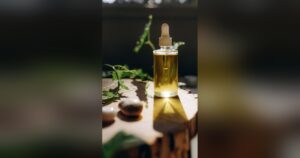
The purest form of the oil the science actually studied, from a brand built on traceable sourcing
Product Brand: PURA VIDA
Product Currency: USD
Product Price: 29.99
Product In-Stock: InStock
4.6