

If you’re looking for the best maca root supplements for women over 50 — you’re about to discover one of the most quietly remarkable roots in the history of women’s health, one that Andean women have trusted for over 2,000 years, and that modern medicine is now finally catching up to.
Youtheory Women’s Maca Root
Gelatinized yellow maca — the exact form and color used in the Harvard-affiliated clinical trials behind this guide. Clean, women’s-focused, and a gentle place to begin.
You might be feeling like your energy quietly slipped away somewhere between your 40s and now. Your libido feels like a stranger. Your mood dips for no clear reason, and the antidepressant that finally helped your mind also seemed to take something else away with it. You may have already tried talking to friends, scrolling endless wellness blogs, or simply telling yourself to push through.
None of this is in your head. And none of it means something is wrong with you.
This is what hormonal transition does to a woman’s body — and it’s exactly why one small Peruvian root has earned the attention of researchers at institutions like Massachusetts General Hospital, a teaching hospital of Harvard Medical School. Maca (Lepidium meyenii) isn’t a trendy new “miracle” ingredient. It’s one of the few natural options with real double-blind, placebo-controlled clinical trials conducted specifically in postmenopausal women — not assumptions borrowed from younger populations or animal cages.
This guide walks you through exactly what the published research found, why it matters more after 50, the truth about the black/red/yellow color differences (most articles get this wrong), and the five maca supplements we trust most for this stage of life.
Last updated: June 2026
A Root with a 2,000-Year Story
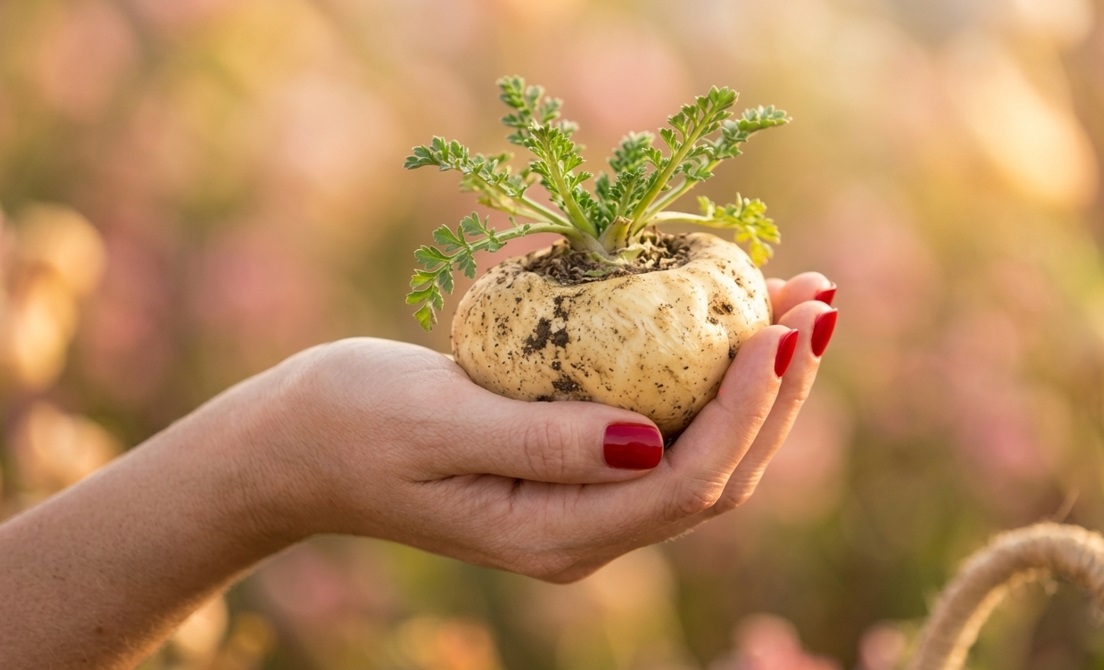
Before maca ever reached a supplement bottle, it was simply how people survived in one of the harshest farmable places on Earth. Maca grows almost exclusively on the Junín Plateau of the central Peruvian Andes, at altitudes between 12,000 and 15,000 feet — so high and so cold that almost no other food crop can grow there. Archaeologists have found preserved maca roots in caves in this region dating back thousands of years, and researchers believe the plant was first domesticated by highland communities roughly 1,300 to 2,000 years ago.
By the time of the Inca Empire, maca had become so valuable that it was used as a form of currency and demanded as tribute from conquered provinces. Oral tradition holds that Incan warriors carried maca with them before long marches and battles for strength and endurance — a detail historians treat as traditional belief passed down through generations, rather than something documented in written record at the time. What is documented: Spanish chroniclers in the 1550s wrote about Andean communities relying on this root for sustenance in a landscape where little else would grow, and colonial tax records show the Spanish crown continued demanding tons of maca annually from local farmers well into the 1700s — proof of just how deeply woven into daily life this root already was.
For centuries after, maca remained almost unknown outside Peru. According to botanical records, it wasn’t until the late 1980s that maca was “rediscovered” for commercial purposes at the Meseta de Bombón plateau near Lake Junín — the same high-altitude region where it had been quietly grown all along. From there, it took the clinical studies referenced throughout this guide, published mostly in the 1990s and 2000s, for the rest of the world to start paying attention to what Andean women had quietly known for two millennia.
We share this not as a sales tactic, but because we think it matters: the women taking maca today are part of a continuous thread that stretches back through the Inca Empire, through Quechua healing traditions, all the way to the original Andean farmers who first noticed this root kept their bodies strong in a place where almost nothing else would grow. That kind of staying power earns a closer look.
What Science Says About Maca and Menopause
Maca is a cruciferous root vegetable grown at high altitude in the Andes Mountains — a distant cousin of broccoli and turnips, in the same plant family. It contains no estrogen and no hormones of any kind. Instead, research suggests maca works as an adaptogen — a compound that helps support your body’s own hormonal signaling rather than replacing it from the outside.
Here is what peer-reviewed, published human research has actually found:
Hot flashes, mood, and hormone balance. A series of clinical studies led by Dr. Henryk Meissner, published in the International Journal of Biomedical Science (2005–2006), followed early-postmenopausal women taking gelatinized maca (Maca-GO) in a double-blind, randomized, placebo-controlled, crossover design. The women showed measurable decreases in FSH, increases in estradiol and luteinizing hormone, and a meaningful reduction in menopausal discomfort as measured by the Greene Climacteric Scale — the same standardized tool many physicians use to track menopause severity.
Libido and sexual wellness. A landmark study published in the journal Menopause (Brooks et al., 2008, PMID: 18784609) found that maca improved psychological symptoms and measures of sexual dysfunction in postmenopausal women — and confirmed this happened without changing estrogen or androgen levels, meaning the effect comes through a different, hormone-independent pathway.
Reversing a side effect most women don’t realize is treatable. Perhaps the most clinically meaningful finding comes from a team at Massachusetts General Hospital, a Harvard Medical School teaching hospital. Dr. Christina Dording and colleagues conducted a registered clinical trial (ClinicalTrials.gov NCT00568126, published in Evidence-Based Complementary and Alternative Medicine, 2015, PMID: 25954318) testing whether maca could help women whose antidepressant medication had affected their sex life. The 12-week, double-blind, placebo-controlled trial found higher remission rates for sexual dysfunction in the maca group — and the benefit was especially pronounced in postmenopausal women specifically. An earlier dose-finding study by the same research group (Dording et al., 2008, PMID: 18801111) laid the groundwork for this finding.
“Maca is great for anxiety, depression, and low libido for women in perimenopause.”
Why This Matters So Much After 50
As estrogen and progesterone decline during perimenopause and menopause, your body’s stress-response system — the hypothalamic-pituitary-adrenal (HPA) axis — often has to work harder to keep things balanced. This is part of why fatigue, anxiety, and a fading libido tend to arrive together during this stage of life rather than as separate, unrelated problems.
Maca stands out because it’s one of the only natural compounds studied specifically in postmenopausal women, rather than in younger populations and extrapolated backward. That distinction matters enormously — it means the research speaks directly to where your body is right now, not where it used to be.
It may be worth exploring if you recognize:
- Afternoon energy crashes that no amount of coffee seems to fix
- A libido that feels distant or simply absent
- Mood dips, irritability, or a flatness that feels unlike you
- Hot flashes or night sweats disrupting your sleep
- Sexual side effects from an antidepressant that otherwise helps your mind
Black, Red & Yellow Maca: The Truth Behind the Colors
This is the part almost every other article gets wrong — so let’s set the record straight, with love and honesty.
Black, red, and yellow maca are not different species. They are the very same plant, grown with different root pigmentation — the same way purple, green, and red grapes are all Vitis vinifera. Laboratory analysis confirms that each color does carry a different concentration of plant compounds, and that part is real, measurable, and not in dispute.
What is far less settled is whether those chemical differences change anything for you, the woman taking the capsule. Every single human clinical trial referenced in this guide — the Meissner studies, the Brooks study, the Dording trials at Massachusetts General — used yellow maca or maca that did not specify a particular color. No published human trial has directly compared black, red, and yellow maca against one another for menopausal symptoms.
🟡 Yellow Maca
The most common variety, and the one actually used in the human clinical trials behind the benefits described in this guide. The gentlest, best-evidenced place to begin.
🔴 Red Maca
Frequently marketed for bone health. That idea comes from laboratory composition and preliminary research — not from human menopause trials, at least not yet.
⚫ Black Maca
Often marketed for focus and stamina. The same honest caveat applies — human evidence specific to menopause hasn’t caught up to the marketing claims yet.
What to Look for in a Maca Supplement
- Gelatinized processing — raw maca powder is harder to digest. Gelatinized maca has the starch removed through gentle heat processing, the same form used in the Meissner clinical trials.
- Yellow maca, or a tri-color blend that includes it — this matches what the published human studies actually used.
- Organic certification — maca draws minerals directly from Andean soil, so where and how it’s grown matters more here than with many supplements.
- A dose that matches the research — clinical trials used between 1.5g and 3.5g daily. Make sure your full daily serving falls near that range.
- Third-party testing — confirms potency and purity, especially important for a root that’s imported from the Andes.
Top 5 Best Maca Root Supplements for Women Over 50
Of the five picks below, Youtheory offers pure yellow maca — the exact variety used in the human research above — while the other four are tri-color blends combining black, red, and yellow root for a broader, traditional whole-root profile.
1. Youtheory Women’s Maca Root — Best Overall
What we love:
- Gelatinized yellow maca — matching the exact form and color studied in postmenopausal clinical trials
- Formulated specifically with women’s needs in mind
- Clean, short ingredient list with no unnecessary fillers
- From a trusted, well-established supplement brand
Worth noting: Doesn’t include red or black maca if you want the full traditional tri-color profile.
2. NutraChamps USDA Organic Maca Root — Best Tri-Color Blend
What we love:
- USDA Certified Organic, gelatinized tri-color blend
- Black pepper extract added for enhanced absorption
- 2,100mg per serving — a generous, traditional-style dose
- Non-GMO with no artificial additives
Worth noting: Includes red and black maca, whose menopause-specific benefits haven’t yet been confirmed in human trials — though there’s no evidence they’re harmful.
3. Peruvian Naturals Organic Maca Root Capsules — Best Higher-Dose Option
What we love:
- 2,400mg per serving — closer to the 3.0–3.5g studied in clinical trials
- Non-GMO and vegan, gelatinized for easier digestion
- Tri-color blend of black, red & yellow maca
Worth noting: The higher dose means more capsules for some women — check serving size before buying.
4. Zazzee USDA Organic Maca Root 10:1 Extract — Best for Fewer Capsules
What we love:
- Concentrated 10:1 extract — more maca delivered per capsule
- Made in the USA with third-party testing for purity
- USDA Certified Organic
Worth noting: Concentrated extracts haven’t been studied as directly as standard gelatinized powder — most clinical research used the latter.
5. Maju Superfoods 4-in-1 Maca Root Capsules — Best Small-Batch Option
What we love:
- Organic tri-color maca sourced directly from Peru
- Black pepper extract included for absorption
- A smaller, loyal brand with strong reviews specifically for mood and energy
Worth noting: Smaller-batch brands can occasionally have less consistent availability than larger manufacturers.
Quick Comparison Table
| Product | Type | Dose/Serving | Best For |
|---|---|---|---|
| Youtheory Women’s Maca Root | Yellow maca | ~1,000mg | Overall best / matches research |
| NutraChamps Organic Maca Root | Black, Red & Yellow | 2,100mg | Complete tri-color blend |
| Peruvian Naturals Maca Capsules | Black, Red & Yellow | 2,400mg | Higher-dose support |
| Zazzee Maca Root 10:1 Extract | Concentrated extract | 1,500mg | Fewer capsules, high potency |
| Maju Superfoods 4-in-1 | Black, Red & Yellow | 1,000mg | Small-batch, mood & energy |
How to Take Maca for Best Results
Match the studied dose. Clinical trials used between 1.5g and 3.5g of maca daily, generally split into two doses taken with meals to ease digestion.
Give it time. Some women notice mood and energy shifts within 1–2 weeks, but the Meissner and Dording trials measured their most meaningful results after 6 to 12 weeks of consistent daily use. Like most things worth doing for your body, this one rewards patience.
Check with your doctor first if: you have a thyroid condition (maca is cruciferous and contains goitrogenic compounds), take hormone-sensitive medication, or manage any chronic health condition. If you’re taking an SSRI or SNRI, it’s worth mentioning the Massachusetts General Hospital research to your prescriber — they may not be aware of it.
Frequently Asked Questions
Does maca contain hormones?
No. Maca contains no estrogen and no hormones of any kind. The Brooks et al. study (PMID: 18784609) specifically confirmed that maca’s benefits occur independently of estrogen or androgen levels — meaning it works through a different biological pathway entirely.
How long until I feel a difference?
Some women notice mood and energy changes within 1–2 weeks. The clinical trials behind this guide measured their most meaningful menopausal symptom improvements after 6–12 weeks of consistent daily use.
Is the color difference (black, red, yellow) backed by human studies?
The chemical differences between colors are real and confirmed by laboratory analysis of the root itself. But no published human trial has directly compared the three colors for menopausal symptoms, mood, or energy — every trial referenced in this guide used yellow or unspecified maca. Color-specific health claims you may see elsewhere aren’t currently backed by human research.
Can maca really help if my antidepressant has affected my sex life?
This is one of the better-studied uses of maca. The Massachusetts General Hospital trial led by Dr. Christina Dording (PMID: 25954318) found higher remission rates for sexual dysfunction among women taking maca compared to placebo, with the effect especially pronounced in postmenopausal women. It’s worth discussing with your prescriber.
Is maca safe to take long-term?
Existing research suggests maca is generally safe for healthy adults at studied doses, though most clinical trials tracked use for a matter of months rather than years. Periodic breaks and ongoing conversation with your doctor are reasonable, gentle precautions.
Other Guides You May Find Helpful
- Best Menopause Supplements for Women Over 50 — for hot flashes and hormone balance
- Best Ashwagandha Supplements for Women Over 50 — for stress and cortisol regulation
- Best Vitamin D Supplements for Women Over 50 — for energy and bone health
Final Verdict — Your Maca Action Plan
Maca holds a quiet, well-earned place among natural menopause options because it has something most trending adaptogens simply don’t: real double-blind, placebo-controlled human trials in postmenopausal women, including research conducted at a Harvard teaching hospital. It won’t work overnight, and the evidence base, while genuinely encouraging, is still smaller than we’d like to see.
For the best all-around choice that matches the actual clinical research, Youtheory Women’s Maca Root gives you the exact yellow maca variety used in the studies behind this guide.
If you want the complete traditional tri-color profile, NutraChamps or Maju Superfoods offer organic black, red & yellow blends.
If you want a higher dose closer to what was used in clinical trials, Peruvian Naturals is the strongest option per serving.
Whichever you choose, take it consistently, give it the full 6–12 weeks, and talk openly with your doctor — especially if you’re navigating thyroid health or antidepressant side effects. You have spent decades taking care of everyone else. This is one small, well-researched way to start taking care of you again. ❤️
According to research published on Examine.com and multiple peer-reviewed studies on PubMed, maca root shows encouraging results for mood, libido, and menopausal symptom relief in postmenopausal women.