
The Egyptians called it the plant of immortality — and carved it onto temple walls. A medical papyrus written 3,500 years ago lists twelve different formulas for it. A Greek physician catalogued its uses in a book that remained the pharmaceutical reference across Europe and the Middle East for more than fifteen centuries.
And yet, in 2015, the International Agency for Research on Cancer classified one form of this same plant as possibly carcinogenic to humans.
Both of those things are true. That’s why this guide exists. If you’re looking into aloe vera for women over 50, the single most important thing to understand isn’t whether aloe works — it’s which part of the leaf you’re actually buying. Get that right, and you have one of the most soothing, well-tolerated plants in the world. Get it wrong, and you have a product regulators have warned about.
Let’s make sure you get it right.
Last updated: July 2026
Seven Minerals Organic Aloe Vera Gel
Cold-pressed inner leaf gel, 99% organic, with no thickeners or alcohol — the form with the strongest evidence and the cleanest safety record. Topical aloe is where the science is genuinely solid.
📋 What’s in This Guide
The Plant of Immortality — 3,500 Years of History
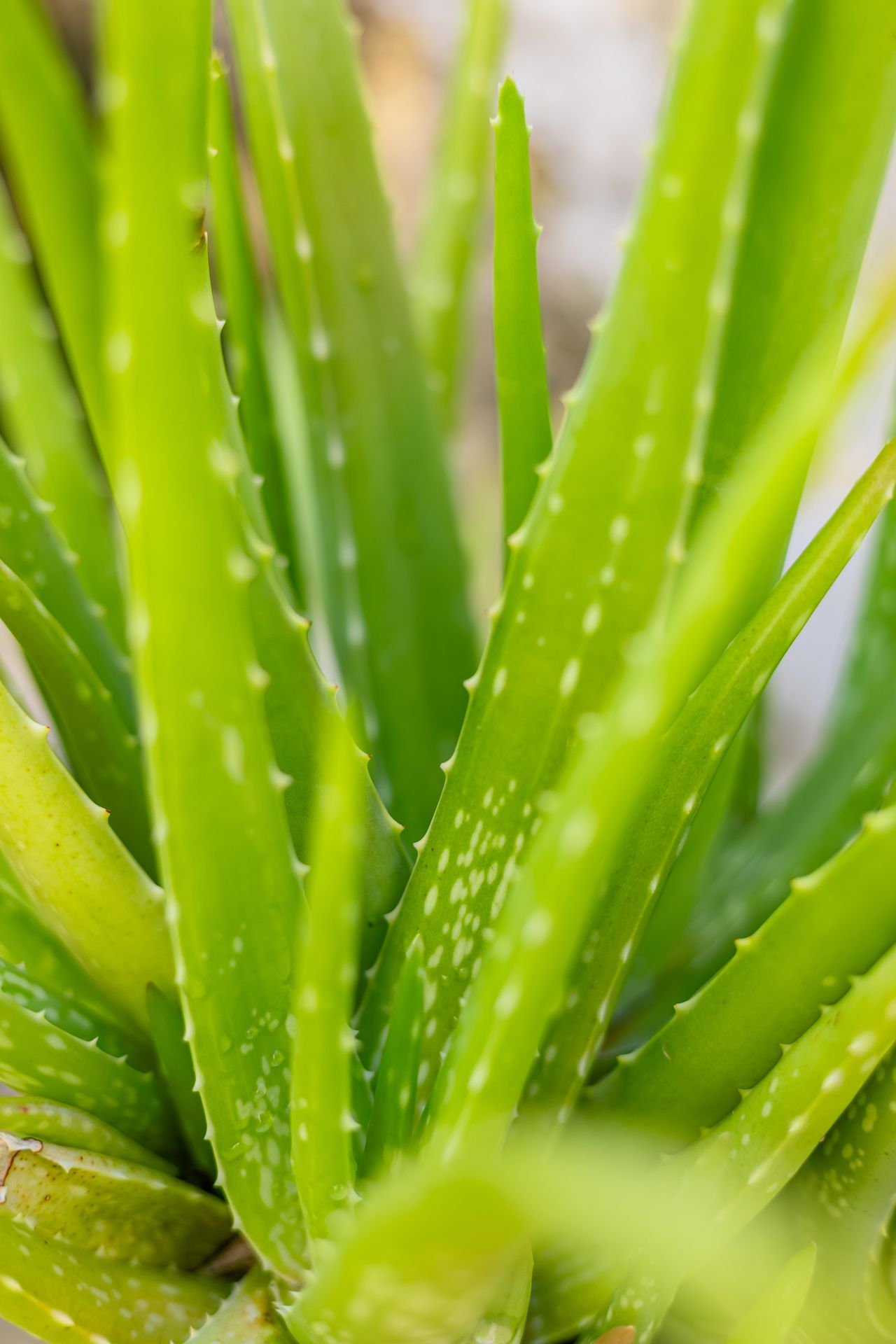
Few plants have followed humanity as closely as this one.
What we know for certain
The Ebers Papyrus, an Egyptian medical text written around 1550 BC and one of the oldest surviving medical documents in the world, contains twelve separate formulas combining aloe with other agents — for wounds, for skin conditions, for internal complaints. This isn’t legend. The papyrus exists, it has been translated, and the aloe formulas are in it.
The Greek historian Herodotus, writing in the fifth century BC, recorded that Egyptians used aloe in the preparation of the dead. The Egyptians themselves called it the plant of immortality, and depictions of it appear on temple walls.
Around 70 AD, the Greek physician Pedanius Dioscorides — a military doctor who traveled with Roman armies — compiled De Materia Medica, a five-volume pharmacopoeia. He documented aloe’s use for wounds, hair loss, ulcers, and hemorrhoids. That work remained the standard pharmaceutical reference across Europe and the Islamic world for over 1,500 years. Pliny the Elder described the plant in his Naturalis Historia in the same century.
And the island of Socotra, off the coast of Yemen, was genuinely a center of the ancient aloe trade — its resin traveling to Greece, to Arabia, to India, and as far as China.
And the legends — which we’ll label as legends
You’ve probably heard that Aristotle advised his student Alexander the Great to conquer Socotra specifically to secure aloe for treating his soldiers’ wounds — and that Alexander carried carts of living aloe plants on campaign so his army always had fresh supply.
It’s a wonderful story. It may well be true. But we want to be straight with you: this account appears in later sources rather than contemporary ones, and historians generally describe it as legend rather than documented fact. The same applies to the tales of Cleopatra and Nefertiti bathing in aloe, and to Columbus supposedly writing “all is well, aloe is on board” as he sailed west.
Inside the Leaf — The Distinction That Changes Everything
This is the most important section in this guide. If you read nothing else, read this.
An aloe leaf is not one substance. It’s three, layered like a sandwich — and they behave completely differently in your body.
The three layers of an aloe leaf
1. The rind — the tough green outer skin. Structural, not medicinal.
2. The latex — a bitter, yellow sap that sits directly beneath the rind. This is where aloin and other anthraquinones live. Aloin is a powerful stimulant laxative, and it is responsible for the cramping, nausea and diarrhea people report from aloe — and for the safety concerns discussed below. This is the part you want removed.
3. The inner leaf gel — the clear, mucilaginous fillet at the center. This is the good part. It’s roughly 98–99% water, and the remaining fraction contains acemannan, an acetylated polysaccharide that holds water remarkably well, along with plant sterols, amino acids, enzymes and vitamins.
Acemannan is the star. It’s the compound most associated with aloe’s soothing and moisture-retaining properties, and it’s the one that appears again and again in the research on wound healing and skin barrier support. When you read about “aloe polysaccharides,” this is what’s meant.
So the honest summary is this: aloe’s benefit lives in the clear gel; aloe’s problems live in the yellow latex. Everything about buying aloe wisely comes down to whether the manufacturer separated the two properly.
Good producers do this in one of two ways: hand-filleting the leaf to take only the inner gel, or filtering whole-leaf juice through activated charcoal in a process called decolorization, which strips out the anthraquinones. Products processed either way will typically state “inner leaf,” “inner fillet,” “decolorized,” or “aloin-free” on the label.
What the Science Actually Shows
Here’s where we separate the two very different evidence bases: aloe on your skin, and aloe in your body.
Topical aloe — the stronger case
This is aloe’s home ground, and it’s where thousands of years of traditional use line up reasonably well with modern findings. Applied to skin, aloe gel is used for soothing minor burns, sunburn, irritation and dryness. Its high water content plus acemannan’s water-binding capacity make it a genuine humectant — it draws and holds moisture in the outer skin layer.
It’s also cooling, non-greasy, and very well tolerated. For a woman over 50 dealing with the drier, thinner skin that follows estrogen decline, that combination is genuinely useful — and the safety concerns around oral aloe simply don’t apply when you’re applying gel to your arms.
Oral aloe gel — promising studies, disappointing meta-analysis
Now the harder conversation, and we’re going to give you the whole picture rather than the flattering half.
The encouraging individual trials: A study from Seoul National University published in the Annals of Dermatology (Cho et al., 2009) found that oral aloe vera gel supplementation improved facial wrinkles and skin elasticity in women — and, notably, increased type I procollagen gene expression in human skin measured directly by biopsy. That’s a real biological mechanism, not just a self-reported impression.
Japanese researchers ran a series of double-blind, randomized, placebo-controlled trials on Aloe sterol, a plant sterol fraction from the gel. In women aged 40 and over, daily oral intake reduced facial wrinkle depth, and improved skin hydration, elasticity and dermal collagen score. In the laboratory, the same sterols roughly doubled collagen production and increased hyaluronic acid production in human dermal fibroblasts.
The authors’ conclusion was unambiguous: current evidence “does not justify recommending oral Aloe vera as a standalone intervention for skin aging.”
Our honest take: The individual trials are genuinely interesting and the mechanism is plausible. But when researchers pooled them rigorously, the effect largely dissolved. That usually means the early studies were too small, too short, or too varied in formulation to be reliable. So: oral aloe gel is reasonable to try if the safety criteria below are met — but it is not a proven anti-aging supplement, and we won’t pretend otherwise. If firmer skin is your goal, the evidence for collagen peptides is considerably stronger.
Digestive comfort
Decolorized inner leaf aloe juice is widely used for digestive soothing, and there is preliminary research suggesting benefit for reflux symptoms and irritable bowel discomfort. The evidence here is early-stage and the studies are small — think “promising traditional use with some modern support,” not “established treatment.”
Why It Matters After 50
Three changes make aloe genuinely relevant at this stage of life:
- Skin gets drier and thinner. As estrogen declines, the skin produces less oil, holds less water, and loses collagen quickly. A humectant that draws moisture into the outer layer addresses exactly that
- Skin becomes more reactive. Many women find that products they tolerated at 40 now sting or redden. Aloe’s cooling, low-irritation profile makes it one of the gentler options available
- Digestion changes. Stomach acid declines, transit slows, and sensitivity often increases — which is precisely why the wrong form of aloe, full of stimulant aloin, is such a bad idea at this age
There’s also a practical point: aloe layers beautifully. It works under a moisturizer, alongside sunscreen, and doesn’t conflict with the internal support you may already be taking — whether that’s collagen peptides, astaxanthin, or omega-3.
Do You Recognize Yourself?
Aloe vera may be worth adding to your routine if several of these apply:
- Your skin has become noticeably drier since menopause
- Products that used to feel fine now sting, tingle or leave you red
- You want something soothing that layers under your moisturizer
- You spend time in the sun, or in dry indoor heating and air conditioning
- You’d rather use something simple and plant-based on your skin
- You’ve been curious about aloe juice but weren’t sure it was safe
Safety — The Section Most Sites Skip
We promised honesty, and this is where it counts most.
- In 2002, the FDA removed aloe latex from over-the-counter laxative products in the United States, citing insufficient safety data
- The National Toxicology Program ran a two-year study on non-decolorized whole leaf extract and concluded there was clear evidence of carcinogenic activity in rats — increased adenomas and carcinomas of the large intestine
- Based on that work, the International Agency for Research on Cancer classified non-decolorized whole leaf aloe extract as possibly carcinogenic to humans (Group 2B)
- California lists “Aloe vera, non-decolorized whole leaf extract” under Proposition 65 as a substance known to cause cancer
- The NIH’s National Center for Complementary and Integrative Health notes that oral aloe leaf extracts have been linked to cases of acute hepatitis, in usage periods ranging from three weeks to five years
Now the essential context, because the headline can mislead. Every one of those findings concerns the non-decolorized whole leaf extract — material loaded with aloin. The NTP study material contained roughly 6,400 parts per million of aloin. Quality commercial inner-leaf products are typically held below 10 ppm, and often below 1 ppm. That is a difference of several orders of magnitude, and the IARC report itself noted that decolorization removes the constituents of concern.
Even so, the NCCIH observes that a small amount of laboratory research suggests even decolorized extract may have some potential to damage DNA or chromosomes. The science isn’t fully settled.
What this means for you, practically:
- Topical aloe is not part of this conversation. Applying gel to your skin carries none of these concerns
- If you drink aloe, only buy inner leaf or decolorized products with aloin content stated — ideally under 10 ppm, and certified by the International Aloe Science Council
- Never use whole leaf, unfiltered, or homemade aloe preparations internally — a leaf from your windowsill still has its latex
- Aloin is a stimulant laxative. Persistent cramping or diarrhea from an aloe product is a signal it wasn’t properly processed. Stop taking it
- Talk to your doctor first if you take diabetes medication (aloe may lower blood sugar), diuretics or heart medication (potential potassium loss), or if you have liver or kidney conditions
- Skip oral aloe entirely if you’re on medication for a serious condition and haven’t cleared it with your physician
What to Look For on the Label
For topical gel:
- Aloe listed as the first ingredient, at a high percentage — 95% or above is ideal
- Inner leaf or cold-pressed processing
- No added alcohol, which dries the skin and undoes the point
- Minimal thickeners — some xanthan gum is normal, but gels that are mostly filler aren’t worth it
- Little or no added fragrance, especially if your skin has become reactive
For anything you swallow:
- “Inner leaf,” “inner fillet,” “decolorized,” or “aloin-free” clearly stated
- Aloin content specified — under 10 ppm; the best products state under 1 ppm
- IASC certification seal (International Aloe Science Council)
- Avoid anything labeled simply “whole leaf” unless it also says decolorized
Top 5 Aloe Vera Products for Women Over 50
1. Seven Minerals Organic Aloe Vera Gel — Best Overall
What we love:
- 99% organic aloe with a very short ingredient list — the aloe genuinely is the product
- Cold-pressed inner leaf, meaning the latex layer is separated out
- Contains no alcohol, which matters enormously for mature skin that’s already drier
- Absorbs without stickiness — a genuine complaint with many aloe gels
- Works under moisturizer, after sun exposure, or on irritated patches
Worth noting: Like all high-purity aloe gels, it contains a small amount of preservative — this is necessary, not a flaw. Aloe is mostly water and would spoil quickly without it. Products claiming to be 100% pure with zero preservatives are usually either mislabeled or have very short shelf lives.
2. Nature Republic Soothing & Moisture Aloe Vera Gel — Best for Sensitive, Reactive Skin
What we love:
- Exceptionally light, cooling texture that layers well under other products
- One of the most widely used aloe gels in the world, with an enormous review base
- Gentle enough for face, neck, and after-sun use
- Excellent value for the size — generous jar at a modest price
- Popular as a soothing overnight layer on dry or irritated skin
Worth noting: At 92%, it contains slightly more supporting ingredients than the purest options, and it does have light added fragrance. If your skin reacts to fragrance of any kind, choose the Seven Minerals option instead.
3. Lily of the Desert Aloe Vera Juice (Inner Fillet) — Best Oral Option
What we love:
- Inner fillet processing — the latex layer is removed rather than blended in
- Certified by the International Aloe Science Council, the industry’s independent verification body
- One of the longest-established aloe companies in the United States, with published toxicology work on their decolorized material
- Organically grown, with clear labeling about what’s in the bottle
- Mild taste compared with unprocessed aloe, which is genuinely unpleasant
Worth noting — and please read this: As explained in the science section, the pooled evidence for oral aloe as a skin treatment did not hold up in the 2025 meta-analysis. Buy this because you want gentle digestive support or simply want to try aloe internally with the safety handled properly — not because you expect it to erase wrinkles. And check with your doctor first if you take medication for diabetes, blood pressure, or heart conditions.
4. George’s Aloe Vera Liquid — Best Taste-Free Oral Option
What we love:
- Uses a fractional distillation process that removes the bitter components entirely — it genuinely tastes like spring water
- No aloin, no anthraquinones, so none of the laxative effect that makes people abandon aloe juice
- Requires no refrigeration and no added preservatives
- Long-standing brand with a loyal following, often recommended for sensitive digestion
- Easy to mix into water or juice without changing the flavor
Worth noting: The same distillation that removes the bitterness also removes some of the plant’s other components, so this is a gentler, lighter preparation than inner fillet juice. Some people prefer that; others want the fuller-spectrum gel. And the same honest caveat applies — the oral skin-aging evidence is weak.
5. Amara Organics Aloe Vera Gel — Best Budget Topical
What we love:
- Solid quality at a noticeably lower price point than premium options
- Made from organically grown aloe, with no artificial colorants
- Light, non-sticky finish that works well for face and body
- Good option for keeping one jar in the bathroom and one by the bed
Worth noting: Contains slightly more thickeners than the highest-purity gels, which some women notice as a marginally heavier feel. For everyday body use that’s a non-issue; for facial use with reactive skin, the purer options are worth the difference.
Quick Comparison Table
| Product | Type | Key Feature | Best For |
|---|---|---|---|
| Seven Minerals | Topical gel | 99% organic, no alcohol | Best overall |
| Nature Republic | Topical gel | Light, cooling texture | Sensitive skin |
| Lily of the Desert | Oral juice | Inner fillet, IASC certified | Best oral |
| George’s | Oral liquid | Tastes like water | Taste-sensitive |
| Amara Organics | Topical gel | Quality at lower cost | Budget |
How to Use Aloe Vera
Topically, apply to clean skin. Aloe absorbs best on slightly damp skin, right after cleansing. Let it dry for a minute before layering a moisturizer on top — the moisturizer then seals in the water the aloe drew in.
Patch test first, even with aloe. Genuine allergy is uncommon but real, particularly in women sensitive to plants in the lily family (garlic, onion, tulip). Try a small area on your inner arm and wait a day.
Keep it in the refrigerator in summer. Chilled aloe on sun-exposed or overheated skin is one of life’s small pleasures, and the cold adds to the soothing effect.
Orally, start very small. Begin with a couple of tablespoons daily rather than the full serving on the label. If you experience any cramping or loose stools, that’s a signal to stop — and possibly a sign the product wasn’t properly decolorized.
Don’t use aloe internally long-term without a break, and don’t use it internally at all while taking medications you haven’t discussed with your doctor.
Skip the windowsill plant for internal use. Cutting a leaf from your own aloe plant and drinking the juice means consuming the latex along with the gel. For topical use on a small burn, fresh gel is lovely. For drinking, use a properly processed commercial product.
Frequently Asked Questions
Is aloe vera safe to drink?
Properly processed inner leaf or decolorized aloe, with aloin removed, is considered safe for most healthy adults in moderate amounts. Non-decolorized whole leaf extract is a different matter entirely — it’s classified by the IARC as possibly carcinogenic to humans and is listed under California’s Proposition 65. The label is everything here. If it doesn’t say inner leaf, inner fillet, decolorized, or aloin-free, don’t drink it.
Will drinking aloe vera reduce my wrinkles?
Some individual clinical trials found improvements in wrinkle depth and elasticity, including one that measured increased procollagen gene expression directly. But a 2025 meta-analysis that pooled the randomized trials found no significant effect on elasticity, hydration or collagen score compared with placebo, and rated the overall certainty of evidence as low. Our honest answer: possibly, but it’s not established. If skin firmness is your primary goal, collagen has a stronger evidence base.
What’s the difference between aloe gel and aloe latex?
Gel is the clear inner fillet — mostly water, plus acemannan and other polysaccharides. It’s the soothing part. Latex is the bitter yellow sap just under the rind, containing aloin, a stimulant laxative. Latex is responsible for both the digestive upset and the safety concerns. Quality products remove it.
Can I use aloe vera on my face every day?
Yes, for most women. Topical aloe is gentle and well tolerated, and daily use on the face is common. Patch test first, avoid formulas with alcohol or heavy fragrance if your skin is reactive, and remember that aloe is a humectant — it works best with a moisturizer layered on top to seal the hydration in.
Does aloe vera interact with medications?
Oral aloe can. It may lower blood sugar, which matters if you take diabetes medication. Aloin-containing products can cause potassium loss, which is a concern alongside diuretics or certain heart medications. There are also documented cases of liver injury associated with oral aloe leaf extracts. Topical use doesn’t carry these concerns. If you take any prescription medication, talk to your doctor before drinking aloe.
Is the aloe plant on my windowsill the same thing?
The same species, but not the same product. When you cut a leaf, you get gel and latex together. That’s fine for dabbing on a small burn. It’s not fine for drinking — which is exactly why commercial processing exists.
📚 Where We Got Our Information
Every claim in this article traces back to a real source — including the ones that complicated the story. Here’s where to verify it yourself.
Other Guides You May Find Helpful
- Best Collagen Supplements for Women Over 50 — stronger evidence for skin firmness from within
- Best Astaxanthin Supplements for Women Over 50 — antioxidant protection that reaches skin tissue
- Best Omega-3 Supplements for Women Over 50 — supports skin hydration from the inside
- Best Probiotic Supplements for Women Over 50 — for digestive comfort
Final Verdict
Aloe vera has been with us for three and a half thousand years, and it earned that place honestly — as something cooling, soothing, and kind to irritated skin. That’s still what it does best.
For everyday topical use, Seven Minerals Organic Aloe Vera Gel is our first choice: 99% organic, inner leaf, no alcohol, nothing unnecessary.
For reactive or easily irritated skin, Nature Republic has the lightest, most pleasant texture on this list.
For drinking aloe safely, Lily of the Desert Inner Fillet is processed the way it should be — inner fillet, IASC certified, transparently labeled.
For anyone who hates the taste, George’s Aloe Vera Liquid genuinely tastes like water.
And for good aloe at a lower price, Amara Organics lets you use it generously without thinking about cost.
One last thing, and it’s the thing we most want you to remember. If you take nothing else from this guide, take this: read the label, and buy inner leaf or decolorized — never whole leaf, never unfiltered. The plant that ancient physicians called immortal is genuinely worth having in your life. It just has to be the right part of the leaf.
That’s a small piece of knowledge. But it’s the difference between something that soothes you and something regulators have warned about — and you deserved to know it. ❤️