
If you’re searching for the best turmeric supplements for women over 50, you’re looking at one of the most researched anti-inflammatory compounds in natural health — with genuine benefits for joints, mood and more. But there’s a catch most sellers won’t tell you: turmeric is famously hard for your body to absorb. This honest guide covers what the science actually shows, and how to choose a supplement that works.
NatureWise Curcumin with BioPerine
A standardized 95% curcuminoid extract paired with black pepper (piperine) to solve turmeric’s biggest weakness — absorption — at an honest price.
Turmeric has been used for thousands of years in traditional medicine, and modern science has taken a serious interest in its active compound, curcumin. For women over 50 navigating joint stiffness, everyday inflammation, and the changes that come with menopause, turmeric offers researched — if modest — support. But here’s the honest truth this guide is built around: plain turmeric is very poorly absorbed by the body. The right formulation makes all the difference between a supplement that does something and one that mostly passes through you. Let’s break down what works.
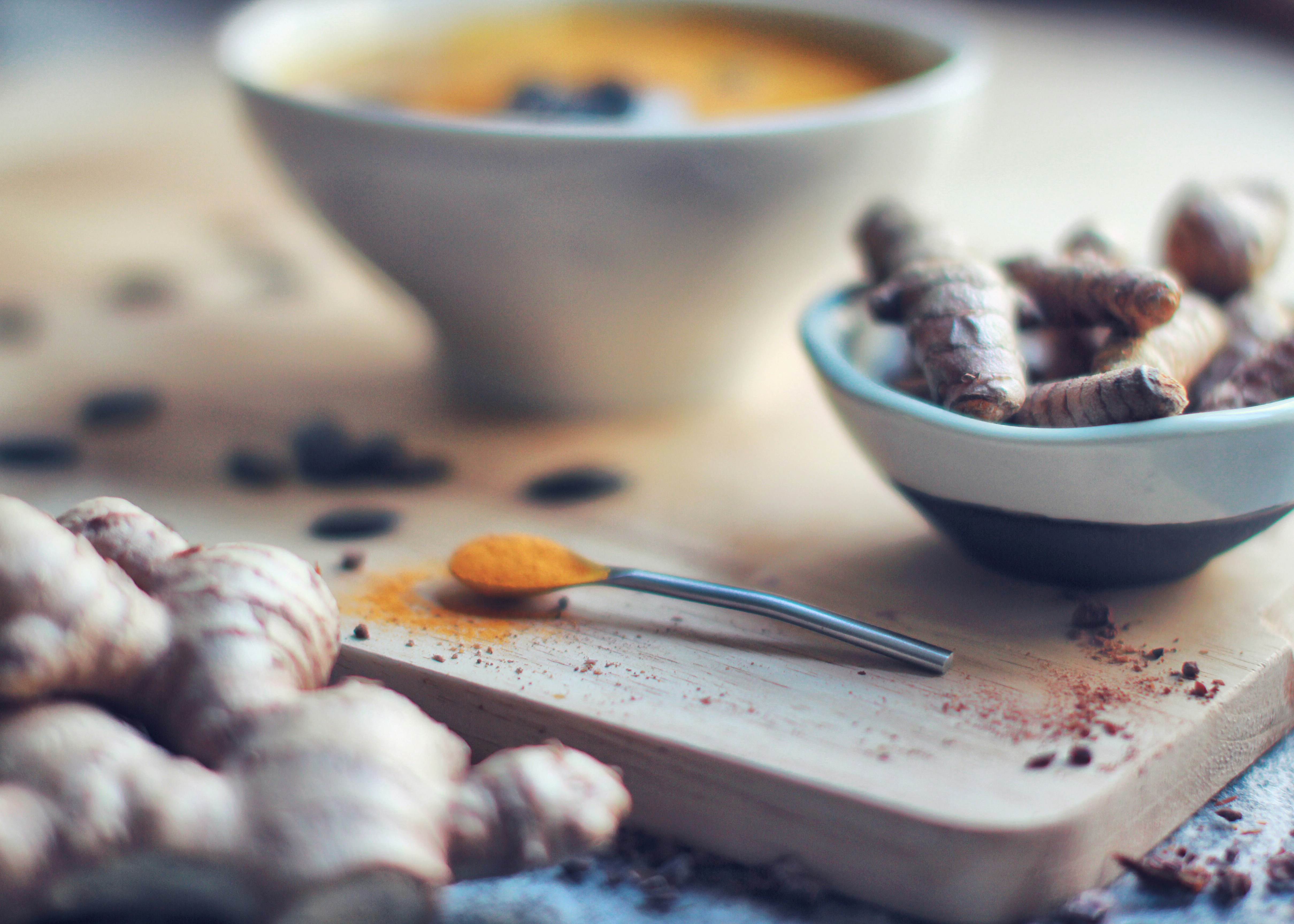
What Science Says About Turmeric for Women Over 50
Turmeric’s benefits come mainly from curcumin, which has been studied for its effects on inflammation, joints, mood and cognition. Here’s what the human research actually shows — honestly. Inflammation. Chronic low-grade inflammation rises with age and is linked to many age-related conditions. A systematic review and meta-analysis of randomized controlled trials (Sahebkar-related literature; White et al., 2019, PMID 31121255) examined oral turmeric and curcumin across a range of chronic inflammatory diseases and found reductions in key inflammatory markers, including CRP, IL-6 and TNF. Curcumin appears to work by dampening the NF-κB inflammatory pathway. The effects are real, though the studies vary in quality — this is supportive evidence, not a cure. Joint comfort. This is one of turmeric’s most popular uses, and the research is reasonably encouraging. Multiple trials have found curcumin can reduce joint discomfort and stiffness, particularly in osteoarthritis. Some studies suggest the benefit can be meaningful for everyday comfort — but it’s best thought of as gentle, ongoing support, not a fast-acting painkiller, and results build over weeks. Memory and mood. A double-blind, placebo-controlled 18-month trial in non-demented adults (Small et al., 2018, PMID 29246725) found that a bioavailable form of curcumin (Theracurmin) improved memory and attention, with brain imaging suggesting reduced amyloid and tau accumulation in mood- and memory-related regions. Separately, research on a lipidated curcumin (Longvida) in healthy older adults aged 50–80 (Cox et al., 2020, PMID 32512782) reported better working memory and lower fatigue. Promising — but these are specific bioavailable formulations, and the research is still emerging. The honest bottom line: Curcumin is genuinely one of the better-researched plant compounds, with real (if modest) support for inflammation, joint comfort, and possibly memory. It’s a legitimate supporting player for healthy aging — not a miracle, and only if it’s in a form your body can actually absorb.
The Absorption Problem — And How to Solve It
Here’s the single most important thing to understand about turmeric: curcumin is notoriously poorly absorbed. On its own, most of what you swallow is broken down and eliminated before it can do much. This is exactly why cheap “turmeric powder” capsules often disappoint — the issue isn’t the turmeric, it’s that your body can’t get it in. Quality supplements solve this in one of a few proven ways: 1. Black pepper (piperine / BioPerine). A compound in black pepper called piperine dramatically improves curcumin absorption. A well-known study found that adding piperine significantly increased curcumin bioavailability (Shoba et al., 1998, PMID 9619120). This is the most common — and most affordable — solution, and it works. 2. Special bioavailable formulations. Branded forms like phytosome-bound curcumin (Meriva), Longvida, and Theracurmin are engineered for far better absorption than plain curcumin. They cost more, but they’re backed by their own research (including the memory studies above). 3. Taking it with fat. Curcumin is fat-soluble, so taking it with a meal containing some fat improves uptake regardless of formulation. The takeaway: never buy plain turmeric without an absorption enhancer. Black pepper is the budget-friendly answer; branded bioavailable forms are the premium option. We cover this in more depth in our supplement absorption guide.
Why Turmeric May Matter After 50
Everyday joint comfort. Joint stiffness becomes more common after 50, and turmeric’s researched support for joint comfort makes it a popular, gentle option — often used alongside other joint-support nutrients. Inflammation and healthy aging. “Inflammaging” — the slow rise in background inflammation with age — is linked to many of the conditions women want to guard against after 50. Curcumin’s anti-inflammatory action fits naturally into that bigger picture. Mood and mental sharpness. The emerging research on curcumin, memory and mood is especially interesting for women navigating the cognitive fog that can accompany menopause — though expectations should stay realistic. A whole-body, food-based approach. For women who prefer supporting their health with plant compounds rather than isolated synthetics, turmeric is a time-honored, well-studied choice.
Do You Recognize Yourself? A Quick Checklist
Turmeric may be worth considering if several of these apply to you:
- ☐ You have everyday joint stiffness or discomfort
- ☐ You want to support your body against age-related inflammation
- ☐ You prefer a well-researched plant compound over synthetic options
- ☐ You’re interested in gentle mood and memory support
- ☐ You’ve tried cheap turmeric before and felt nothing (likely an absorption issue)
- ☐ You understand it’s ongoing support, not a fast-acting remedy
If you checked 2 or more, a well-formulated turmeric could be a worthwhile addition — with realistic expectations.
What to Look for When Buying Turmeric Supplements for Women Over 50
1. An absorption enhancer — non-negotiable. Look for black pepper (piperine/BioPerine) or a branded bioavailable form (Meriva, Longvida, Theracurmin). Without one, you’re likely wasting your money. 2. Standardized to 95% curcuminoids. Quality extracts state “standardized to 95% curcuminoids” — this ensures a consistent, potent dose of the active compounds rather than just ground turmeric root. 3. Third-party tested. Independent testing confirms potency and screens for contaminants like heavy metals and adulterants (turmeric has occasionally been adulterated in the supply chain, so this matters). 4. A sensible dose. Most studies use 500–1,000mg of curcumin (or curcuminoids) daily, often split into two doses. More isn’t automatically better. 5. Clean formulation. Look for minimal fillers and no unnecessary additives — just the curcumin extract and its absorption enhancer.
Top 5 Best Turmeric Supplements for Women Over 50
1. NatureWise Curcumin with BioPerine — Best Overall
Best for: Women who want a standardized, well-absorbed curcumin at a fair price Curcumin: 95% curcuminoids + BioPerine | Form: Capsule | Price: $18–$25/month What we love:
- Standardized to 95% curcuminoids for a potent, consistent dose
- Includes BioPerine (black pepper extract) to solve the absorption problem
- NatureWise is a popular, well-reviewed brand
- Non-GMO and third-party tested
- Excellent value for the quality
- Sensible, research-aligned dosing
Worth noting: Contains black pepper extract — if you’re on medications, see the safety note below, as piperine can affect how some drugs are processed. Bottom line: The sensible all-around choice — standardized, absorption-enhanced, trusted brand, fair price. This is where most women should start.
2. Jarrow Formulas Curcumin Phytosome (Meriva) — Best Bioavailable Form
Best for: Women who want a well-absorbed phytosome form without black pepper Curcumin: 500mg Meriva phytosome | Form: Veggie capsule | Price: $22–$30/month What we love:
- Uses Meriva — curcumin bound to phospholipids (phosphatidylcholine) for far better absorption than plain curcumin
- No black pepper needed — the phytosome technology handles absorption, ideal if you take medications piperine can interact with
- Jarrow Formulas is a science-focused brand established in 1977
- Vegan, non-GMO veggie capsules
- Made in cGMP-certified facilities
- Particularly studied for joint health
Worth noting: The typical serving is one capsule twice daily with food. A mid-range price for a genuine bioavailable form — good value for the technology. Bottom line: The bioavailable pick — the same Meriva phytosome technology used in clinical research, in a well-reviewed, vegan formula that absorbs well without piperine.
3. NOW Foods Curcumin — Best Value Trusted Brand
Best for: Women who want a standardized extract from a trusted brand at a great price Curcumin: 95% curcuminoids | Form: Veg capsule | Price: $15–$22/month What we love:
- Standardized to 95% curcuminoids
- NOW Foods is a long-established brand with rigorous in-house and third-party testing
- Excellent value
- Vegetarian capsules
- GMP-certified manufacturing
- Widely available and consistently reliable
Worth noting: Check whether your chosen NOW curcumin product includes black pepper or is designed to be taken with a fatty meal — take steps to ensure good absorption either way. Bottom line: A dependable, well-priced standardized curcumin from a brand you can trust. Great value for everyday use.
4. Gaia Herbs Turmeric Supreme — Best Whole-Root Blend
Best for: Women who prefer a whole-plant, herbalist-style formulation Curcumin: Turmeric extract + whole root + black pepper | Form: Liquid Phyto-Cap | Price: $22–$30/month What we love:
- Combines concentrated curcumin extract with whole turmeric root
- Includes black pepper for absorption
- Gaia Herbs is a respected herbal brand with strong sourcing transparency
- Vegan liquid-filled capsules
- Their “Meet Your Herbs” traceability lets you verify your product’s testing
- Whole-plant approach for those who prefer it
Worth noting: A whole-root blend means a different (often gentler) profile than a pure 95% extract — a plus if you like herbalist-style formulas, though the curcumin dose per capsule may be lower. Bottom line: The whole-plant choice for women who prefer a traditional, herbalist-style turmeric with excellent sourcing transparency.
5. Sports Research Turmeric Curcumin C3 Complex — Best with Coconut Oil
Best for: Women who want a softgel with built-in fat for absorption Curcumin: C3 Complex 95% + BioPerine + coconut oil | Form: Softgel | Price: $20–$28/month What we love:
- Uses the well-studied C3 Complex standardized to 95% curcuminoids
- Includes BioPerine and organic coconut oil — a double absorption boost (piperine + fat)
- Non-GMO verified and third-party tested
- Sports Research is a well-reviewed, quality-focused brand
- Convenient once-daily softgel
- Clean formulation
Worth noting: Contains black pepper — see the medication safety note below if relevant to you. Bottom line: A smart softgel that pairs the researched C3 Complex with both piperine and coconut oil for absorption. A great option if you like softgels.
Quick Comparison Table
| Product | Absorption | Best For | Price/month |
|---|---|---|---|
| NatureWise + BioPerine | Black pepper | Overall best | $18–25 |
| Jarrow Curcumin Phytosome | Phytosome (Meriva) | Bioavailable form | $22–30 |
| NOW Foods Curcumin | 95% (take w/ fat) | Value trusted brand | $15–22 |
| Gaia Herbs Supreme | Black pepper | Whole-root blend | $22–30 |
| Sports Research C3 | Piperine + coconut oil | Softgel | $20–28 |
How to Take Turmeric Safely
Take it with a meal that contains some fat. Curcumin is fat-soluble, so this improves absorption — and it’s gentler on the stomach. Split the dose. Taking your curcumin as two smaller doses (e.g. morning and evening) can keep levels steadier and is easier on digestion than one large dose. Be patient. Turmeric’s benefits — especially for joints and inflammation — build over weeks of consistent use. It’s not a fast-acting painkiller. Important safety notes:
- Blood thinners: Curcumin can have a mild blood-thinning effect. If you take warfarin, aspirin, or other blood thinners, talk to your doctor first.
- Black pepper and medications: Piperine can affect how your body processes certain medications. If you take prescription drugs, check with your doctor or pharmacist — or choose a piperine-free bioavailable form like Meriva.
- Gallbladder issues: Turmeric can stimulate bile; if you have gallstones or bile duct problems, avoid supplemental doses unless cleared by your doctor.
- Surgery: Stop turmeric supplements about two weeks before any scheduled surgery, due to the blood-thinning effect.
- Pregnancy/nursing: Avoid supplemental doses unless advised by your doctor (culinary amounts are fine).
Frequently Asked Questions About Turmeric for Women Over 50
Why didn’t cheap turmeric work for me? Almost certainly an absorption problem. Plain turmeric or curcumin without an enhancer is very poorly absorbed — most of it passes through you. Choose a product with black pepper (piperine/BioPerine) or a bioavailable form like Meriva, Longvida, or Theracurmin, and take it with a fatty meal. Is turmeric the same as curcumin? Not quite. Turmeric is the root/spice; curcumin (and related “curcuminoids”) is the active compound within it, making up only a few percent of turmeric by weight. Supplements standardized to 95% curcuminoids concentrate the active part. How much turmeric should I take? Most research uses 500–1,000mg of curcumin/curcuminoids daily, often split into two doses and taken with food. Follow the product label, and remember more isn’t automatically better. Can turmeric replace my arthritis medication? No. Turmeric may offer gentle, supportive joint comfort, but it’s not a replacement for prescribed treatment. Never stop a medication without talking to your doctor — turmeric is a complement, not a substitute. Does turmeric interact with medications? It can. Curcumin has a mild blood-thinning effect, and the black pepper in many products can alter how some medications are processed. If you take any prescription drugs — especially blood thinners — check with your doctor or pharmacist first.
Other Guides You May Find Helpful
- Best Joint Supplements for Women Over 50 — turmeric’s natural partners for joint comfort
- Best CoQ10 Supplements for Women Over 50 — another researched antioxidant
- Why Your Body Isn’t Absorbing Your Supplements — the science of bioavailability, including curcumin + black pepper
- The Why Behind It — the science behind supplements, explained simply
Where We Got Our Information
We stick to verifiable research and are honest about its limits. You can check our main sources here:
Final Verdict — Your Turmeric Action Plan
Turmeric, through its active compound curcumin, is one of the more genuinely well-researched plant supplements — with real, if modest, support for inflammation, joint comfort, and possibly memory and mood after 50. But its Achilles’ heel is absorption, so the formulation matters more than almost any other supplement: without black pepper or a bioavailable form, you’re likely wasting your money. Our honest guidance: choose a product with a proven absorption enhancer, take it with a fatty meal, be consistent, and give it several weeks. And because curcumin can interact with blood thinners and other medications, check with your doctor if that applies to you. For the best all-around choice, NatureWise Curcumin with BioPerine delivers standardized potency and absorption at a fair price. For a bioavailable phytosome form, Jarrow Curcumin Phytosome is excellent. For value from a trusted brand, NOW Foods works well. For a whole-plant approach, Gaia Herbs is ideal, and for a convenient softgel, Sports Research C3 Complex is a great pick. Choose a well-absorbed form, pair it with food, stay consistent — and give this golden root a fair chance to support your healthy aging. 🌿